Wednesday, June 18, 2008

Tuesday, June 17, 2008
You Got Listserved 6/17/08
This email was sent out on the largest listserv of university staff...for all to see. It's regarding the raises we recently received. This person sends out multiple pointless listserv emails every day, so I wonder what gives her boss the idea that she hasn't earned a big raise.
I'm not understanding all that I'm reading from my letter about
my raise but I think I do understand that if I were any good at
my job, I would have gotten somewhere close to the 2.5 pool.
Since I only got 1.2 I guess I realize I suck worse than I thought
and need to look elsewhere. With that in mind, I'm just wondering
if many of the other departments on campus use Macs? I think here
in the COE we are a particularly Mac-y bunch but I wonder elsewhere
if y'all are all PC or what? Dear Lord, I hate interviewing. Trying to
convince somebody I don't suck and why and how I'll only improve
with age like fine wine and cheese. I wonder why I feel moldy today. :)
What I’m Reading This Summer
While I’m (supposed to be) spending most of these summer months studying for the Georgia Bar, I have also found time to come across a few good reads. And no, I'm talking about A Walk Across America or some Maya Angelou nonsense. I'm talking about real page-turners with substance. I have composed this short reading list for anyone interested.
1. In Defense of Global Capitalism by Johan Norberg.
 Anyone familiar with socialist politics knows of Naomi Klein, a left-wing Canadian author who argues that free-market capitalism is somehow responsible for all of the ills the world faces today. The only small problem is that her "novels" are entirely devoid of facts. Instead of substantiating claims that free enterprise in fact lowers living standards, she merely strings together terms that already have really negative perceptions and attempts to portray them as "capitalist": Iraq, oil, war, Bush, insurgency, Enron, shock & awe, Katrina, dirty water, Halliburton, greed, Bush, oil, etc. At no point does she actually demonstrate how economic freedom hurts the middle class or the poor. In no way is she able to prove that people under capitalism are worse off than before. And yet Klien's fiction is pervasive on college campuses.
Norberg, a young Swedish economist and former socialist, authors Defense as a response to Klien's irratic rantings. Norberg presents his arguments in a both eloquent and fact-laden form. Virtually every sentence contains citations to respectable, non-partisan sources lending credence to Norberg's claims. He successfully illustrates how the adoption of free enterprise has brought millions out of poverty in China, made the environment cleaner in Latin America, put more food on the table in Russia, and raised health and living standards in nearly every corner of the globe. Norberg serves as this generation's Adam Smith, and In Defense is his Wealth of Nations. I would recommend this short treatise to any 18-year old heading off to college this coming fall.
2. Economics in One Lesson by Henry Hazlitt.
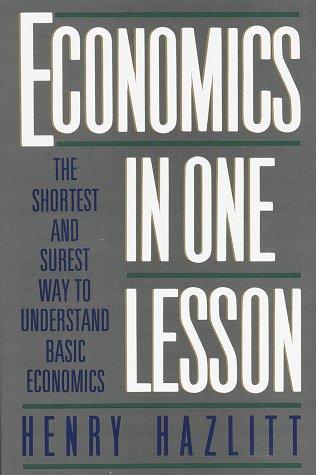 This classic, first published in the 1940s following the Second World War, will have a profound impact on how you view economics. If you're new to conservative or libertarian economic philosophy, this book is a fantastic starting point for education on fundamental issues. Even if you've been a conservative for a long time, it still serves as a great foundation to come back to.
What's fascinating is just how extremely out of favor Hazlitt's views were at the time he wrote Economics and how they remained that way when he published its final edition in the 1970s. In just over 200 pages, the book concisely covers a host of topics, ranging from the broken window fallacy, the function of prices, the role of profits, the destructive nature of inflation and subsidies, and the virtues of saving. What is equally amazing is how true Hazlitt's points remain today in the face of ever-increasing calls for new government mandates, price controls, subsidies, and trade barriers. In this way, Hazlitt's treatise serves not only as an economics lesson, but as a history lesson, educating readers that we're doomed to repeat the malaise of the past if we don't right course.
3. Automatic Wealth For Grads by Michael Masterson.
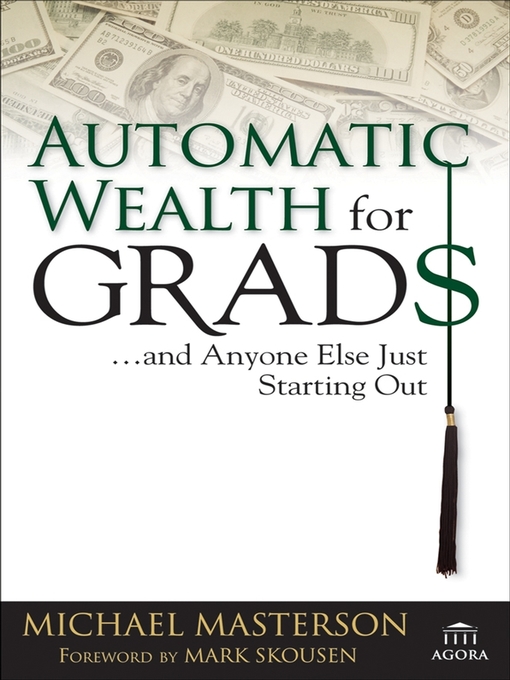 I recently watched Obama give a commencement address advising recent grads to forestall making money at six-figure corporate jobs and instead to actually "help society" by volunteering for community groups. But we all know that the only real way to help society is to go out and make as much money as possible, which is why I've recommended this next selection.
A departure from the ideological titles, Automatic Wealth is a great read for those of us just now entering the job market. The book discusses investing in real estate or equities and boosting your annual income. At the heart of Masterson's advice is saving 15% of gross income per year, which, at a respectable rate of return, would make it impossible to not be a millionaire upon retirement. To many recent grads, saving 15% will seem like an impossible feat, but Masterson specifically spells out ways this goal can be achieved on an annual income as little as $30,000. I think recent grads would be far better served receiving this book at their commencements instead of tired, old class-warfare rhetorics from politicians.
4. How the West Grew Rich: The Economic Transformation of the Industrial World by Nathan Rosenberg and L.E. Birdzell, Jr.
 Many academics in the humanities departments throughout the country argue that Western Europe and America unfairly became rich because we colonized the Third World, enslaved millions, or because white people are just somehow naturally "smarter."
Rosenberg, a history professor at Standford, and Birdzell, an attorney and legal scholar, emphatically refute such arguments. They demonstrate how the vast majority of the West's growth came after slavery and colonization were abolished. Instead, they point to the existence of legal institutions and cultural norms that have long been favorable to growth, voluntary exchange, and capital formation, including the common law legal system, the lack of centralized authority during the medieval period, the Protestant Work Ethic, and a reliance on markets to coordinate production.
In closing, I think most of ya'll can tell I've already read these books. And the truth is, I have, numerous times, cover to cover. But that shouldn't stop you from doing the same. For my money, these titles should sit right next to that worn-out copy of The Lords of Discipline.
1. In Defense of Global Capitalism by Johan Norberg.
Anyone familiar with socialist politics knows of Naomi Klein, a left-wing Canadian author who argues that free-market capitalism is somehow responsible for all of the ills the world faces today. The only small problem is that her "novels" are entirely devoid of facts. Instead of substantiating claims that free enterprise in fact lowers living standards, she merely strings together terms that already have really negative perceptions and attempts to portray them as "capitalist": Iraq, oil, war, Bush, insurgency, Enron, shock & awe, Katrina, dirty water, Halliburton, greed, Bush, oil, etc. At no point does she actually demonstrate how economic freedom hurts the middle class or the poor. In no way is she able to prove that people under capitalism are worse off than before. And yet Klien's fiction is pervasive on college campuses.Norberg, a young Swedish economist and former socialist, authors Defense as a response to Klien's irratic rantings. Norberg presents his arguments in a both eloquent and fact-laden form. Virtually every sentence contains citations to respectable, non-partisan sources lending credence to Norberg's claims. He successfully illustrates how the adoption of free enterprise has brought millions out of poverty in China, made the environment cleaner in Latin America, put more food on the table in Russia, and raised health and living standards in nearly every corner of the globe. Norberg serves as this generation's Adam Smith, and In Defense is his Wealth of Nations. I would recommend this short treatise to any 18-year old heading off to college this coming fall.
2. Economics in One Lesson by Henry Hazlitt.
This classic, first published in the 1940s following the Second World War, will have a profound impact on how you view economics. If you're new to conservative or libertarian economic philosophy, this book is a fantastic starting point for education on fundamental issues. Even if you've been a conservative for a long time, it still serves as a great foundation to come back to.What's fascinating is just how extremely out of favor Hazlitt's views were at the time he wrote Economics and how they remained that way when he published its final edition in the 1970s. In just over 200 pages, the book concisely covers a host of topics, ranging from the broken window fallacy, the function of prices, the role of profits, the destructive nature of inflation and subsidies, and the virtues of saving. What is equally amazing is how true Hazlitt's points remain today in the face of ever-increasing calls for new government mandates, price controls, subsidies, and trade barriers. In this way, Hazlitt's treatise serves not only as an economics lesson, but as a history lesson, educating readers that we're doomed to repeat the malaise of the past if we don't right course.
3. Automatic Wealth For Grads by Michael Masterson.
I recently watched Obama give a commencement address advising recent grads to forestall making money at six-figure corporate jobs and instead to actually "help society" by volunteering for community groups. But we all know that the only real way to help society is to go out and make as much money as possible, which is why I've recommended this next selection.A departure from the ideological titles, Automatic Wealth is a great read for those of us just now entering the job market. The book discusses investing in real estate or equities and boosting your annual income. At the heart of Masterson's advice is saving 15% of gross income per year, which, at a respectable rate of return, would make it impossible to not be a millionaire upon retirement. To many recent grads, saving 15% will seem like an impossible feat, but Masterson specifically spells out ways this goal can be achieved on an annual income as little as $30,000. I think recent grads would be far better served receiving this book at their commencements instead of tired, old class-warfare rhetorics from politicians.
4. How the West Grew Rich: The Economic Transformation of the Industrial World by Nathan Rosenberg and L.E. Birdzell, Jr.
Many academics in the humanities departments throughout the country argue that Western Europe and America unfairly became rich because we colonized the Third World, enslaved millions, or because white people are just somehow naturally "smarter."Rosenberg, a history professor at Standford, and Birdzell, an attorney and legal scholar, emphatically refute such arguments. They demonstrate how the vast majority of the West's growth came after slavery and colonization were abolished. Instead, they point to the existence of legal institutions and cultural norms that have long been favorable to growth, voluntary exchange, and capital formation, including the common law legal system, the lack of centralized authority during the medieval period, the Protestant Work Ethic, and a reliance on markets to coordinate production.
In closing, I think most of ya'll can tell I've already read these books. And the truth is, I have, numerous times, cover to cover. But that shouldn't stop you from doing the same. For my money, these titles should sit right next to that worn-out copy of The Lords of Discipline.
Monday, June 16, 2008
The "Reverend" Al Sharpton Makes Scratch
If you've ever wondered how men of the cloth such as Al Sharpton make their money, here's your answer.
Sunday, June 15, 2008
Ireland Rejects EU Treaty by Wide Margin
By Hilary White
DUBLIN, June 13, 2008 (LifeSiteNews.com) - Irish voters have voted "No", by 53.4 per cent to 46.6 per cent, to their country ratifying the European Union's Lisbon Treaty, the document that was to replace the European Constitution defeated by French and Dutch referenda in 2005. Ireland was the only one of the 27 EU member states obliged by law to hold a referendum on the Treaty.
The European commission president, José Manuel Barroso, said he believed the Treaty was still "alive," despite the resounding defeat in Ireland. This, however, was immediately contradicted by Luxembourg's Prime Minister, Jean-Claude Juncker - the longest serving leader in the EU - who said the Irish vote meant the Treaty could not enter into force in January 2009 as planned. Under the EU rules, the Treaty required unanimous consent of all member states. Barroso said EU leaders would consider their response at a summit in Luxembourg next week.
The French Prime Minister, Francois Fillon, said, "If the Irish people decide to reject the treaty of Lisbon, naturally, there will be no treaty of Lisbon."
The head of the European Union's current presidency is now demanding an explanation for the Irish people's democratically obtained rejection of the Treaty. "I will invite the Irish Prime Minister to explain the reasons for the rejection of the treaty by the Irish people," said Slovenian Prime Minister Janez Jansa.
EU leaders have vowed that, despite the vote, the concept of a reformed European Union constitution will go forward. Barroso said today that the Treaty must go forward with the ratification process. France's Europe Minister Jean-Pierre Jouyet said the EU must discuss a "legal arrangement" with Ireland.
The Treaty's defenders said the 300 page document was merely a way of streamlining "EU governance" and re-working the system of national votes to more closely reflect the various positions of the member states.
Pro-democracy groups in Ireland warned, however, that the same dangers to democracy and national sovereignty exist with this revised version of the rejected EU Constitution as were in the original. Ratification of the Treaty, they maintained, would threaten the democratic principles upon which the Irish polity rests, including citizenship.
Anthony Coughlan of the National Platform EU Research and Information Centre, wrote that the Lisbon Treaty ratification would create a new super-state "in the constitutional form of a supranational European federation" making citizens of ratifying countries primarily into citizens of that super-state, "owing obedience to its laws and loyalty to its authority," in contrast to their current honorary EU 'citizenship'.
Pro-life advocates argued that this would threaten the Irish constitutional protection for the unborn, given the almost universal acceptance and promotion of abortion at the EU level. Certain EU bodies have also lobbied hard for pressure to be put on countries that retain their legal protections for natural marriage.
Coughlan wrote that the reforms of the Lisbon Treaty would grant the EU a "legal personality" and corporate existence fundamentally different from its current make-up. It would, he said, "for the first time, [be] separate from and superior to its member states". It would reduce sovereign nations like Ireland, Britain and Germany, to the status of subordinate states comparable to the relationship between the state of Texas and the US Federal government.
"Politically and legally, this is the core element of an EU constitution," which, Coughlan said, is the least-discussed aspect of the Treaty. Coughlan is a Senior Lecturer Emeritus in Social Policy at Trinity College Dublin and Secretary of the National Platform.
Party leaders in Ireland are re-thinking their positions on the Treaty after the vote. All three major parties had supported a Yes vote for ratification. Party leaders in Dublin are said to be stunned at the size of the margin against their position. In the two constituencies of county Donegal, two thirds of voters said no to Lisbon. The biggest no vote was in Dublin South West, which saw a 65.1% majority.
In Britain, Tory opposition leader, David Cameron, whose party supported a referendum in Britain, said it is time to abandon the ratification of the Treaty. The Labour party, which pushed the ratification of the Treaty through Parliament without a public vote, contrary to their 2005 campaign promise, is now facing plummeting opinion polls. Prime Minister Gordon Brown refused to allow a vote, claiming that the Lisbon Treaty was substantially different from the previous document. This, however was widely refuted by legal experts, and even some prominent EU politicians, who said the differences between the two documents were negligible.
The Treaty would give the EU more law-making powers, Coughlan added, and would transfer more powers to the EU from national states, national parliaments and citizens. The non-elected Commissions have a monopoly on proposing EU laws. Laws would be made primarily by an irremovable "oligarchy," of 27 legislating politicians who constitute the Council of Ministers, who would make laws for 450 million Europeans.
Weight would be given to nations by population, which would reduce the relative voting weight and influence of small and middle-sized states, such as Ireland, Poland and Malta, the three EU countries maintaining legal protections for the unborn
Thursday, June 12, 2008
An Old Newness- By Thomas Sowell
Rose and Milton Friedman Senior Fellow
The Hoover Institution
Stanford University
Stanford, California 94305
By Thomas SowellTuesday, April 29, 2008
Many years ago, a great hitter named Paul Waner was nearing the end of his long career. He entered a ballgame with 2,999 hits -- one hit away from the landmark total of 3,000, which so many hitters want to reach, but which relatively few actually do reach.
Waner hit a ball that the fielder did not handle cleanly but the official scorer called it a hit, making it Waner's 3,000th. Paul Waner then sent word to the official scorer that he did not want that questionable hit to be the one that put him over the top.
The official scorer reversed himself and called it an error. Later Paul Waner got a clean hit for number 3,000.
What reminded me of this is the great fervor that many seem to feel over the prospect of the first black President of the United States.
No doubt it is only a matter of time before there is a black president, just as it was only a matter of time before Paul Waner got his 3,000th hit. The issue is whether we want to reach that landmark so badly that we are willing to overlook how questionably that landmark is reached.
Paul Waner had too much pride to accept a scratch hit. Choosing a President of the United States is a lot more momentous than a baseball record. We the voters need to have far more concern about who we put in that office that holds the destiny of a nation and of generations yet unborn.
There is no reason why someone as arrogant, foolishly clever and ultimately dangerous as Barack Obama should become president -- especially not at a time when the threat of international terrorists with nuclear weapons looms over 300 million Americans.
Many people seem to regard elections as occasions for venting emotions, like cheering for your favorite team or choosing a Homecoming Queen.
The three leading candidates for their party's nomination are being discussed in terms of their demographics -- race, sex and age -- as if that is what the job is about.
One of the painful aspects of studying great catastrophes of the past is discovering how many times people were preoccupied with trivialities when they were teetering on the edge of doom. The demographics of the presidency are far less important than the momentous weight of responsibility that office carries.
Just the power to nominate federal judges to trial courts and appellate courts across the country, including the Supreme Court, can have an enormous impact for decades to come. There is no point feeling outraged by things done by federal judges, if you vote on t he basis of emotion for those who appoint them.
Barack Obama has already indicated that he wants judges who make social policy instead of just applying the law. He has already tried to stop young violent criminals from being tried as adults.
Although Senator Obama has presented himself as the candidate of new things -- using the mantra of "change" endlessly -- the cold fact is that virtually everything he says about domestic policy is straight out of the 1960s and virtually everything he says about foreign policy is straight out of the 1930s.
Protecting criminals, attacking business, increasing government spending, promoting a sense of envy and grievance, raising taxes on people who are productive and subsidizing those who are not -- all this is a re-run of the 1960s.
We paid a terrible price for such 1960s notions in the years that followed, in the form of soaring crime rates, double-digit inflation and double-digit unemployment. During the 1960s, ghett oes across the countries were ravaged by riots from which many have not fully recovered to this day.
The violence and destruction were concentrated not where there was the greatest poverty or injustice but where there were the most liberal politicians, promoting grievances and hamstringing the police.
Internationally, the approach that Senator Obama proposes -- including the media magic of meetings between heads of state -- was tried during the 1930s. That approach, in the name of peace, is what led to the most catastrophic war in human history.
Everything seems new to those too young to remember the old and too ignorant of history to have heard about it.
Thomas Sowell is a senior fellow at the Hoover Institute and author of Basic Economics: A Citizen's Guide to the Economy.
Wednesday, June 11, 2008
Ante Up
The BC Annual Fund drive ends June 30th. If you have not already sent your donation, you need to do so. Every gift counts! I challenge each of you, with the exception of Michael, to contribute at least $50. You can make your check payable to Benedictine Military School and mail it to:
Benedictine Military School
Annual Fund
6502 Seawright Dr.
Savannah, GA 31406
Be sure to include a note with your name and graduation year so that you can be credited for your donation.
NO EXCUSES!
Benedictine Military School
Annual Fund
6502 Seawright Dr.
Savannah, GA 31406
Be sure to include a note with your name and graduation year so that you can be credited for your donation.
NO EXCUSES!
Monday, June 09, 2008
Pinching pennies at the gas pump? Let's elect Obama!
http://www.reuters.com/article/topNews/idUSWAT00963020080609
Any rational person can see the danger of Obama's "let's punish the rich" tax policies.
Would implenting a "windfall tax" on big oil company profits increase, or decrease energy prices?
Any rational person can see the danger of Obama's "let's punish the rich" tax policies.
Would implenting a "windfall tax" on big oil company profits increase, or decrease energy prices?
On Capturing Pigs
I hate mass emails, but I have pasted for you one I received today. Below is a great analogy to remember while listening to the upcoming presidential debates.
A chemistry professor was recently teaching in a large college that had some exchange students in the class. One day while the class was in the lab the Prof noticed one young man (exchange student) who kept rubbing his back, and stretching as if his back hurt.
The professor asked the young man what was the matter. The student told him he had a bullet lodged in his back. He had been shot while fighting communists in his native country who were trying to overthrow his country's government and install a new communist government In the midst of his story he looked at the professor and asked a strange question. He asked, 'Do you know how to catch wild pigs?'
The professor thought it was a joke and asked for the punch line. The young man said this was no joke. 'You catch wild pigs by finding a suitable place in the woods and putting corn on the ground. The pigs find it and begin to come everyday to eat the free corn. When they are used to coming every day, you put a fence down one side of the place where they are used to coming. When they get used to the fence, they begin to eat the corn again and you put up another side of the fence.
They get used to that and start to eat again. You continue until you have all four sides of the fence up with a gate in the last side. The pigs, who are used to the free corn, start to come through the gate to eat, you slam the gate on them and catch the whole herd.
Suddenly the wild pigs have lost their freedom. They run around and around inside the fence, but they are caught. Soon they go back to eating the free corn. They are so used to it that they have forgotten how to forage in the woods for themselves, so they accept their captivity.
The young man then told the professor that is exactly what he sees happening to America The government keeps pushing us toward socialism and keeps spreading the free corn out in the form of programs such as supplemental income, tax credit for unearned income, tobacco subsidies, dairy subsidies, payments not to plant crops (CRP), welfare, medicine, drugs, etc. While we continually lose our freedoms - just a little at a time.
One should always remember: There is no such thing as a free lunch! Also, a politician will never provide a service for you cheaper than you can do it yourself.
In this 'very important' election year, listen closely to what the candidates are promising you!
Just maybe you will be able to tell who is about to slam the gate on America.
A government big enough to give you everything you want, is big enough to take away everything you have. - Thomas Jefferson
The Radical Takeover of the Democrat Party
I have become too busy to write long treatises on Conservative vs. Liberal conflicts. So, I will from time to time copy and past great articles that are much more better than yours truly.
This article is from www.lifesitenews.com
I suggest everyone sign up for the Life Site News daily email. Most of the articles cover Canadian stuff. But, they report much on U.S. and European happenings as well.
By Dale O'Leary
June 6, 2008 (LifeSiteNews.com) -
The Democrat party is in the midst of a great battle and while the pundits recognize that something is going on, none of them seem willing or able to explain the nature of the conflict. At root, the battle is a battle between Liberals and Radicals.
Take the issue of rights. Conservatives believe that everyone has equal rights, no matter their sex or race or ethnic background or religion. Liberals also believe in equal rights, but they believe that equal rights should lead to statistically equal outcomes. Conservatives accept that giving people equality of opportunity and rights does not guarantee equality of results, but Liberals see inequality of results and assume that there has been some injustice. Therefore, Liberals push for affirmative action, quotas, and other artificial mechanisms, which they hope will create statistical equality. This inevitably replaces one injustice with another.
Radicals are not interested in equality of rights or even statistical equality of results. Radicals believe that all history is the history of class struggle: the rich oppressing the poor, those of European ancestry oppressing those of African ancestry, men oppressing women, heterosexuals oppressing gays, lesbians and transgendered, America oppressing developing nations. It is not enough for the oppressors to stop oppressing and offer equality of opportunity and rights, or even equality of results. According to the Radicals, the oppressors have enjoyed "privileges" that the oppressed have been denied. This privilege consists in belonging to the privileged oppressor class. So even if you personally have never engaged in a single act of racism, sexism, or homophobia, the fact that you are a white, heterosexual male means that you have benefited from being a member of the oppressor class and therefore you are guilty and you deserve to pay.
Justice for the Radicals is forcing oppressors to pay through humiliation, through the destruction of their institutions (like the Boy Scouts), and monetarily through reparations. According to the Radicals, America is an oppressor nation because it is rich and other nations are poor. For Radicals, the economy is a zero sum game. They don't understand that the American system created wealth. For them all wealth is stolen from the oppressed. Of course, in countries where Radicals have gained control and eliminated the rich, no wealth is created and everyone accept the ruling Radicals is poor (for example, Cuba).
For the Radicals, America is the great Satan, the incarnation of evil; therefore even if America engages in military activities to free other people from oppression, America is wrong and deserves to lose. On the other hand, for the Radicals, terrorists are oppressed and therefore their actions are justified.
Another issue on which Radicals and Liberals part ways is the question of tolerance. For the Conservative, tolerance means allowing other people to speak their minds even when you believe they are wrong. For Conservatives people have rights, but opinions have no rights. It is perfectly acceptable to criticize foolish and dangerous opinions and to believe that you are right and other people are wrong.
Liberals are also for tolerance, but they tend to fall into moral relativism. Liberals believe that not only are all people equal, all opinions are equal. They don't actually believe this, what they really believe is that moral relativism is the only truth, and anyone who believes that it is possible to make judgments is dogmatic, bigoted, or narrow minded.
Radicals, when they are not in power, vociferously defend their right to freedom of speech, and scream intolerance when, after they have been allowed to speak, someone criticizes their extreme statements. However, when in power Radicals shut down the speech of anyone who disagrees with them. If they don't have the outright power to censor, they send out goon squads to scream, bang pans, and threaten to riot in order to assure that no voice but their own is heard. We see this occurring in universities that used to be bastions of Liberalism, but have fallen under the control of the Radicals. While persons with extreme Radical views are hired and receive tenure, Liberals who question Radicalism are marginalized, and Conservatives are banned outright. Conservative speakers are denied the opportunity to speak - they are either not invited to speak or are shouted down when they try to speak.
Although to conservatives Hillary Clinton is an extreme Liberal, she is still a Liberal. On the other hand, Barack Obama has spent his life in the company of Radicals. Rev. Wright's Black Liberation Theology is the epitome of Radicalism, as is Fr. Pfleger's ideological distortion of Catholic social teaching. William Ayers and Bernadine Dohrn are unrepentant Radicals.
Barack Obama claims to want to bring people together, but there is not a single example of his reaching out to Conservatives. On the other hand, in spite of the embarrassment they have caused him he has consistent refused to denounce the Radicals in his past, and frankly if he did it now we would have to assume that he was acting out of political expedience not from a real recognition of the danger to our democracy posed by his friends' Radical views.
In the 1960s Conservatives drew a hard line between themselves and the extremists of the Right - KKK, Neo-Nazi. Liberals, on the other hand, made common ground with Radicals. They now face the prospect of a Radical takeover of the Democratic party. The only way the Liberals can save their party and ultimately save America is to vote for John McCain.
Wednesday, June 04, 2008
Wednesday, May 28, 2008
Wednesday, May 14, 2008
Barr For President?
 Ron Paul's candidacy drove me nuts, particularly his loony, adolescent, hippie supporters (We should have diplomatic ties with Iran because 9/11 was really an inside job by the neocons who are funded by the Federal Reserve to help the military-industrial complex implement the North American Union by the Council of Foreign Relations who are opposed to the gold standard...etc...etc...).
Barr, who declared his candidacy just two days ago, is actually a mature adult with reasonable, polished views. Don't get me wrong, some of his positions can still be a little "out there" at times, but he will undoubtedly appeal to economic conservatives who feel alienated by McCain's nomination (especially that God-awful, Soviet-style cap and trade plan he unveiled Monday) and much of the past 7 years of Bush. He's also from Georgia, which can only boost his appeal in South. Assuming the race will be tight in November (an assumption we are nowhere near yet entitled to make), Barr could very well do to McCain what Nader did to Gore in 2000. Should be interesting.
Friday, May 09, 2008
T-Bolt, What!
At least we know the students at Sol C. Johnson High School carry the much needed street cred.
Wednesday, May 07, 2008
Why Conservatives Are Happier Than Liberals
Could we have some liberals out there comment on this recent article from Fox News?
Please, don't get angry.
Please, don't get angry.
Monday, May 05, 2008
Evil Wal-Mart is at it again.
The Evil Empire, dba Wal-Mart, is up to no good again.
How can we Americans stand for such a corrupt, money mongering conglomerate who ruins our precious Mother Earth, keeps our citizens from earning a decent wage, and fills sweat shops across third world countries?
Hopefully, Obama will pass legislation to eliminate this good for nothing corporation.
How can we Americans stand for such a corrupt, money mongering conglomerate who ruins our precious Mother Earth, keeps our citizens from earning a decent wage, and fills sweat shops across third world countries?
Hopefully, Obama will pass legislation to eliminate this good for nothing corporation.
Friday, May 02, 2008
New World Socialism
Hillary Clinton and Barack Obama agree on one thing: they will "look out for the hard-working middle class", and not overtax those making under $250,000 per year.
In the past 8 months, I have gotten 3 raises that increase my base salary by exactly $700 per month. The difference in my paycheck? Exactly $26 per month.
My morale has been effectively murdered. Why should I take on more responsibility and strive to advance in my career path if all Iget out of it is ulcers, headaches, and $26 a month??
If this is how a Republican administration "looks out for the middle class", imagine the personal liberty devastation that could come in January 2009.
I know that as Conservatives we want to boycott this election because it lacks a candidate that adequately represents our philosphy - BUT the alternative to John McCain is worse than we realize.
I ask one simple favor on behalf of moderate income singles everywhere: do not vote FOR McCain, vote AGAINST further erosion of our freedoms. I don't want to sound like MTV or Puff Daddy, but there is a lot at stake - so vote or die!
Monday, April 28, 2008
Kickass Reagan Quotes: Communism Edition
I've mentioned before how one of the Gipper's greatest talents was his innate ability to communicate big, complex ideas in simple terms that Joe Sixpack could relate to. An example would be his knack for making a complete mockery of socialism and everything it stands for in short, bite-size jokes that would powerfully resonate with audiences in both the U.S. and the Soviet bloc. With Castro stepping down last month I thought it would be a good time to post this:
Monday, April 21, 2008
For Calvaryf@n
In the words of Al Gore, "the debate is over." Cadet baseball, playing without any of its seniors, beat the Cavaliers 10-7 earlier today. We are running out of things to beat ya'll in this year. It's starting to get boring.
Friday, April 18, 2008
Giving Credit Where It's Due
Excellent, excellent job by ABC's Charles Gibson in asking this question at Wednesday night's debate (you only need to watch the first 3 minutes or so of this clip to see what I mean). Unfortunately, Obama resorts to a drawn-out non-answer that proves he doesn't really understand or care about how the Laffer Curve works; instead, he just wants to "soak the rich," even if it lowers tax revenues, because it feels "fair."
But Gibson takes him to task and states the question a second time after he fails to answer it, which is quite shocking. As much as I hate the MSM's constant dumbed-down, class warfare portrayal of economic issues, ABC did an exceptional job Wednesday night.
Monday, April 14, 2008
Seven Years Ago
Benedictine's Junior/Senior Prom was held this past Satueday at the Hyatt. It's hard to believe that was us seven years ago.

So young...so innocent.
2001 Junior/Senior Prom
Location: Marriott Riverfront
Theme: After Midnight
Post Party: Tybee Straits
Feel free to post what you remember from that glorious night.

So young...so innocent.
2001 Junior/Senior Prom
Location: Marriott Riverfront
Theme: After Midnight
Post Party: Tybee Straits
Feel free to post what you remember from that glorious night.
Friday, April 11, 2008
McCain Joins Bailout Bandwagon
Hillary/Obama: "We think the gov't should be able to violate contract law, rescind voluntary agreements made by consenting adults, coerce banks to lend at rates they otherwise wouldn't, and use taxpayer money to further subsidize stupidity."
McCain: "Don't Worry!! Me too!!"
I can't wait to not vote for this man.
McCain: "Don't Worry!! Me too!!"
I can't wait to not vote for this man.
Tuesday, April 08, 2008

Would You Rather
Would you rather:
BC start accepting girls as students and have football moved to single A
or
Calvary become the Savannah football powerhouse for the next 50 years and you have a stepbrother as their star quarterback to start off that historic run?
BC start accepting girls as students and have football moved to single A
or
Calvary become the Savannah football powerhouse for the next 50 years and you have a stepbrother as their star quarterback to start off that historic run?
Wednesday, April 02, 2008
Why I Dislike John McCain
 Anyone who reads this blog regularly knows I'm no John McCain fan, and one of the basic reasons for this is that I do not consider McCain to be conservative. But this may frustrate some readers because "conservative" is a word that gets tossed around a lot by a lot of different people. Just what exactly does it mean? Obviously, everybody interprets the word differently, so I will attempt to better explain why I am turned off my McCain's candidacy instead of simply resorting to obscure labels and categories.
Barry Goldwater and Ronald Reagan were limited-government conservatives. In other words, they were Republicans because they were inherently skeptical of the federal government's ability to plan the economy and solve all of society's problems. Instead, they believed individuals could better plan their own lives themselves, and that a large welfare state created more problems than it solved. They saw a large, powerful, expanding bureaucracy (whether it be at home in Washington or abroad in Moscow) as a threat to individual freedom and prosperity. They subscribed to the belief that "a government big enough to give you everything you want is also big enough to take away everything you have," and their mantra was individual liberty consistent with transcendent order. We could also refer to these types as "leave us alone" conservatives.
McCain, on the other hand, is what we may consider a "national greatness" conservative. In other words, he is Republican because he's a hawk with an astounding war record who made the most honorable of sacrifices for his country during Vietnam, which I have the deepest respect for. He loves this country more than anything else in the world, and this is no doubt a reflection of his impeccable moral character. But this unfortunately leads to his biggest flaw: his long-held, deep-rooted belief that greatness can only be achieved through some great "crusade" that we all have to fight for, some overarching cause that we're all in together, and fulfilling this overarching duty is what makes people decent and good Americans. For example, in a speech the other day he said he's discovered that "nothing in life is more liberating than to fight for a cause that encompasses you but is not defined by your existence alone," and that "there is no honor or happiness in just being strong enough to be left alone." He's always quick to remind us that he served the country "not for profit, but for patriotism."
So unlike Goldwater or Reagan, the maximum goal for McCain isn't individual liberty, but is instead duty, sacrifice, and moral righteousness instigated by the same bureacracy Goldwater and Reagan so vociferously opposed. This is what drives McCain, and whether it's regulating baseball, curtailing campaign finance, fighting climate change, or lambasting hedge funds, it's all about the "duty" politicians and Americans have to "step in," join the "cause," and "do the 'right' thing," which ultimately translates into a political philosophy that is not only inconsistent with traditional conservatism, but often stands directly antithetical to it.
For more on this, check out Prof. Bainbridge's recent post on the topic, which breaks things down a little more elaborately with more direct quotes and analysis.
Saturday, March 22, 2008
Recession, Part 2 of 2
Okay, ya'll lucked out. Turns out this will only be a 2-part series. We conclude things today by looking at the consequences of the housing boom and what political leaders can and should do in the future.
V. The Fallout
 As we saw from last time, the Federal Reserve began fueling an unsustainable boom in housing by cutting interest rates to rock-bottom levels beginning in 2001, but eventually had to allow rates to rise back up to contain inflation. As rates began to rise in 2005, a trend which continued up until last year, many adjustable-rate borrowers began to take a hit as their mortgage payments increased. In addition, as rates rose, purchasing new homes became a much less attractive idea. This led to a drop in home prices, making it tougher for short-term borrowers to "flip" their properties as they had originally intended. All of this translated into a surge of foreclosures as banks were forced to recoup what they could as borrowers defaulted.
Beginning in September of '07, as foreclosures continued to skyrocket and many subprime mortgages (loans given out to lower-income borrowers) went into default, investors who normally purchase mortgage-backed securities began to get cold feet and stopped providing the cash necessary to finance these mortgages . This has led to what the media has referred to as the "liquidity crisis" or "credit crunch." It has become much harder for people to get financing as banks are far more cautious about who they lend to.
As a result of the above developments, there have been massive layoffs across the housing and real estate sector. Many employees hired during the boom period have recently been laid off. The "cluster of errors" I mentioned in yesterday's post are revealing themselves, and the market has begun to prune back these unfruitful investments.
VI. Politicians to the Rescue (Lord Help Us)
 Just this past week, President Bush told the press he's "on top" of the economic situation. The only small problem with this statement is that it's entirely impossible. The president doesn't "control" or "run" the economy. Heck, he hardly even runs his own staff. For him to suggest he's somehow on top of a $10 trillion entity where hundreds of millions of people enter into countless unseen transactions with each other every day is beyond laughable, yet the majority of voters think this way.
Politicians don't run the economy, and considering all of the damage that government intervention and central planning has been shown to cause, we should certainly be thankful that they don't.
VII. What Bush Can Do
But while the recession is inevitable, there are certain things the President and Congress can do to strengthen the country's long-term economic fundamentals for the future.
1. Call for a large, across-the-board reduction in both income and capital gains tax rates.
This would encourage more risk-taking and would raise returns on investment and work by allowing people to keep more of the fruits of their labor. It would also help keep somewhat of a lid on federal spending by straight-jacketing Congress' spendthrift ambitions.
The Democrats' plan to "soak the rich" (i.e., raise taxes on the people that already pay all of the taxes) doesn't make much sense: it would discourage growth and help finance an even further growth of a federal bureaucracy that's already way too big.
2. Approve drastic reductions in federal spending.
Getting out of Iraq would be nice, as would overhauling entitlements and vetoing any new pork-barrel spending. Freeing up money that would otherwise be spent on bridges to nowhere would be used more productively and efficiently in the private sector.
3. Tell the Fed to keep a tight lid on the money supply.
Inflation corrodes the very seed of economic growth (people's savings) and distorts the calculations entrepreneurs and business owners try to make. Tightening the money supply would slay inflation and preclude the fueling of another unsustainable boom.
4. Unconditionally support free and open trade.
This would unequivocally signal to the rest of the world that the United States is ready to benefit from and contribute to global trade. Welcoming investment and cheap goods from abroad lowers costs and raises living standards; embracing protectionism does just the opposite.
VII. Concluding Thoughts
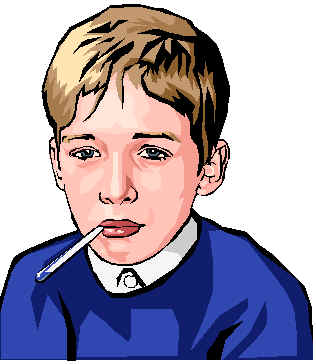 As we've seen, recessions aren't necessarily bad things: they are the market's way of correcting the mistakes of government (Fed) intervention so that things can be brought back on an even keel. Think of them as economic "fevers": they serve as a painful but short-lived indication that the free market is doing its job cleansing uneconomic investments so that things can be brought back to normal.
Thus, the best medicine for recessions is to sit back and allow them to run their course. Attempting to inflate the money supply further (which is what the Fed has been doing since August) and handing out "stimulus" checks will only prolong and possibly worsen the hangover's inevitably.
In the meantime, the President and Congress could get to work on the 4 proposals I've outlined above. I won't hold my breath.
V. The Fallout
As we saw from last time, the Federal Reserve began fueling an unsustainable boom in housing by cutting interest rates to rock-bottom levels beginning in 2001, but eventually had to allow rates to rise back up to contain inflation. As rates began to rise in 2005, a trend which continued up until last year, many adjustable-rate borrowers began to take a hit as their mortgage payments increased. In addition, as rates rose, purchasing new homes became a much less attractive idea. This led to a drop in home prices, making it tougher for short-term borrowers to "flip" their properties as they had originally intended. All of this translated into a surge of foreclosures as banks were forced to recoup what they could as borrowers defaulted. Beginning in September of '07, as foreclosures continued to skyrocket and many subprime mortgages (loans given out to lower-income borrowers) went into default, investors who normally purchase mortgage-backed securities began to get cold feet and stopped providing the cash necessary to finance these mortgages . This has led to what the media has referred to as the "liquidity crisis" or "credit crunch." It has become much harder for people to get financing as banks are far more cautious about who they lend to.
As a result of the above developments, there have been massive layoffs across the housing and real estate sector. Many employees hired during the boom period have recently been laid off. The "cluster of errors" I mentioned in yesterday's post are revealing themselves, and the market has begun to prune back these unfruitful investments.
VI. Politicians to the Rescue (Lord Help Us)
Just this past week, President Bush told the press he's "on top" of the economic situation. The only small problem with this statement is that it's entirely impossible. The president doesn't "control" or "run" the economy. Heck, he hardly even runs his own staff. For him to suggest he's somehow on top of a $10 trillion entity where hundreds of millions of people enter into countless unseen transactions with each other every day is beyond laughable, yet the majority of voters think this way.Politicians don't run the economy, and considering all of the damage that government intervention and central planning has been shown to cause, we should certainly be thankful that they don't.
VII. What Bush Can Do
But while the recession is inevitable, there are certain things the President and Congress can do to strengthen the country's long-term economic fundamentals for the future.
1. Call for a large, across-the-board reduction in both income and capital gains tax rates.
This would encourage more risk-taking and would raise returns on investment and work by allowing people to keep more of the fruits of their labor. It would also help keep somewhat of a lid on federal spending by straight-jacketing Congress' spendthrift ambitions.
The Democrats' plan to "soak the rich" (i.e., raise taxes on the people that already pay all of the taxes) doesn't make much sense: it would discourage growth and help finance an even further growth of a federal bureaucracy that's already way too big.
2. Approve drastic reductions in federal spending.
Getting out of Iraq would be nice, as would overhauling entitlements and vetoing any new pork-barrel spending. Freeing up money that would otherwise be spent on bridges to nowhere would be used more productively and efficiently in the private sector.
3. Tell the Fed to keep a tight lid on the money supply.
Inflation corrodes the very seed of economic growth (people's savings) and distorts the calculations entrepreneurs and business owners try to make. Tightening the money supply would slay inflation and preclude the fueling of another unsustainable boom.
4. Unconditionally support free and open trade.
This would unequivocally signal to the rest of the world that the United States is ready to benefit from and contribute to global trade. Welcoming investment and cheap goods from abroad lowers costs and raises living standards; embracing protectionism does just the opposite.
VII. Concluding Thoughts
As we've seen, recessions aren't necessarily bad things: they are the market's way of correcting the mistakes of government (Fed) intervention so that things can be brought back on an even keel. Think of them as economic "fevers": they serve as a painful but short-lived indication that the free market is doing its job cleansing uneconomic investments so that things can be brought back to normal.Thus, the best medicine for recessions is to sit back and allow them to run their course. Attempting to inflate the money supply further (which is what the Fed has been doing since August) and handing out "stimulus" checks will only prolong and possibly worsen the hangover's inevitably.
In the meantime, the President and Congress could get to work on the 4 proposals I've outlined above. I won't hold my breath.
Friday, March 21, 2008
Recession, Part 1 of 2
This will be the first in a short series of posts (maybe 3, maybe 2, not really sure how long it's going to take) on the current economic situation. Today, we'll look generally at what a recession is, what causes one, and how this applies to the current slowdown we're experiencing. You will also get a general sense of how big of a loser I am.
 The headlines are everywhere: there's a good chance the economy is either in a recession or rapidly headed towards one. After 6 years of decent growth, the economy is losing jobs.
I'm proud to say this blog mentioned the possibility of a recession around a year and a half ago, and I agree that we're in some form of a recession now and may be for the next few months. But it is necessary to explain what a recession is, how we got in one, and what, if anything, could be done to avoid another one in the future.
I. Just what IS a Recession?
The word gets thrown around loosely in newspapers, although very few people know how to actually define what it is. And to determine just what a recession truly is, we must also determine what causes a recession in the first place.
The textbook definition of the word is when the nation's gross domestic product fails to grow for at least two consecutive quarters. In other words, when the total value of all goods and services bought and sold shrinks during a 6 month period, the nation has technically experienced a recession. But this definition is flawed in that it's directed more to the effects of the recession instead of its actual causes. Sure, the economy contracted for 2 straight quarters, but how? Why? What made this happen? What causes this sudden downturn in business activity? If we break these things down we can better understand why we're in a slowdown and what, if anything, can be done about it.
II. A Two-part Process
The way I see it, a recession can best be viewed of as a two-part, cause and effect, process:
1. MALINVESTMENT: A situation where firms and their investors collectively make bad economic decisions by pouring $ into projects that originally looked profitable, but turned out not to be.
2. LIQUIDATION: The negative effects are felt as the bad investments must be "cleansed." A cluster of errors is revealed as balance sheets turn from green to red and firms are forced to cut production and layoff workers. These layoffs of course translate into lower incomes for workers and their families, which means people have less money to spend, which can translate into further layoffs in industries that produce consumer goods, and the ripples disseminate further.
So in essence, a recession is an inevitable transitionary period during which investors and businesses pull their $ out of bad investments so it can be returned it to truly sound and profitable ones.
But there is still more to this. To be sure, in a free-market economy, bad investment decisions are made all the time. Business go under, risks are undertaken and many fail (this, of course, is why the are called risks). But a crucial question to ask is just how could so many bad investments have been made all at the same time? Is it just a mere coincidence that, every 8-10 years or so, millions of businesses across the country all happen to get it wrong simultaneously?
The reality is we experience what is known as the business cycle. The reason (and blame) for this cycle and the recessions it creates lies not with any inherent failings of free-market capitalism, but instead with the Federal Reserve Board's ability to lower interest rates, which sends a false signal throughout the economy.
III. How the Fed Causes the Business Cycle
Interest rates are determined by the supply and demand of loanable funds. In other words, when people are saving more, banks have more deposits, making rates low. When people are borrowing more and saving less, banks don't have as many deposits and rates are higher. So the "price" of a loan is simply determined by the supply of and demand for savings. Makes perfect sense, right? But here's the kicker, and this is key to understand: the Fed is able to step in and manipulate interest rates by printing new money out of thin air and injecting it into banks. This lowers the interest rate (at least in the short term) and induces investment and economic activity that otherwise would not take place.
 The Fed did this in the wake of the dot-com bubble burst at the end of the 90's to "soften the blow" from the previous recession. Between 2001 and 2004, the Fed's printing presses were in full gear as Greenspan lowered rates to unprecedented lows. This induced all kinds of economic decisions that would have otherwise never taken place: Home buyers took advantage of ridiculously cheap mortgages. People that usually wouldn't have been able to afford a home used interest-only, no money down financing and bought up new houses like they were going out of style. As home prices skyrocketed, homebuilders ramped up production to fill a seemingly insatiable demand for new inventory. Mortgage companies, banks, brokers, contractors, and anyone involved in the housing sector hired millions of new workers to keep up with the boom. Basically, tons of resources (money, land, people) were allocated toward a sector that looked in, say, 2003 or 2004, to be insanely profitable.
Unfortunately, there comes a point where the Fed realizes it cannot keep these "artificially" low rates down forever: by continuing to print more and more dollars, the economy inevitably begins to experience the worst of all economic evils: inflation. The nature of inflation and its harmful effects are for another post, but suffice it to say that the Fed realizes it cannot go on creating money out of thin air and has to eventually allow rates to rise back up to their natural market level. This is what happened between 2005 and 2007.
IV. Concluding Thoughts, For Now
 So you can think of the Fed's lowering of interest rates and the inflationary boom it creates like drinking alcohol or caffeine: the good effects are felt immediately, while the bad effects come later. Like Snuffy on St. Patrick's Day, inflation of the money supply creates a period where no pain is felt and you do lots of things you otherwise wouldn't have in a normal setting. But, as we all know, these good times are short-lived, and a hangover is inevitable. This is where we'll pick up next time. Class is dismissed for now.
The headlines are everywhere: there's a good chance the economy is either in a recession or rapidly headed towards one. After 6 years of decent growth, the economy is losing jobs.I'm proud to say this blog mentioned the possibility of a recession around a year and a half ago, and I agree that we're in some form of a recession now and may be for the next few months. But it is necessary to explain what a recession is, how we got in one, and what, if anything, could be done to avoid another one in the future.
I. Just what IS a Recession?
The word gets thrown around loosely in newspapers, although very few people know how to actually define what it is. And to determine just what a recession truly is, we must also determine what causes a recession in the first place.
The textbook definition of the word is when the nation's gross domestic product fails to grow for at least two consecutive quarters. In other words, when the total value of all goods and services bought and sold shrinks during a 6 month period, the nation has technically experienced a recession. But this definition is flawed in that it's directed more to the effects of the recession instead of its actual causes. Sure, the economy contracted for 2 straight quarters, but how? Why? What made this happen? What causes this sudden downturn in business activity? If we break these things down we can better understand why we're in a slowdown and what, if anything, can be done about it.
II. A Two-part Process
The way I see it, a recession can best be viewed of as a two-part, cause and effect, process:
1. MALINVESTMENT: A situation where firms and their investors collectively make bad economic decisions by pouring $ into projects that originally looked profitable, but turned out not to be.
2. LIQUIDATION: The negative effects are felt as the bad investments must be "cleansed." A cluster of errors is revealed as balance sheets turn from green to red and firms are forced to cut production and layoff workers. These layoffs of course translate into lower incomes for workers and their families, which means people have less money to spend, which can translate into further layoffs in industries that produce consumer goods, and the ripples disseminate further.
So in essence, a recession is an inevitable transitionary period during which investors and businesses pull their $ out of bad investments so it can be returned it to truly sound and profitable ones.
But there is still more to this. To be sure, in a free-market economy, bad investment decisions are made all the time. Business go under, risks are undertaken and many fail (this, of course, is why the are called risks). But a crucial question to ask is just how could so many bad investments have been made all at the same time? Is it just a mere coincidence that, every 8-10 years or so, millions of businesses across the country all happen to get it wrong simultaneously?
The reality is we experience what is known as the business cycle. The reason (and blame) for this cycle and the recessions it creates lies not with any inherent failings of free-market capitalism, but instead with the Federal Reserve Board's ability to lower interest rates, which sends a false signal throughout the economy.
III. How the Fed Causes the Business Cycle
Interest rates are determined by the supply and demand of loanable funds. In other words, when people are saving more, banks have more deposits, making rates low. When people are borrowing more and saving less, banks don't have as many deposits and rates are higher. So the "price" of a loan is simply determined by the supply of and demand for savings. Makes perfect sense, right? But here's the kicker, and this is key to understand: the Fed is able to step in and manipulate interest rates by printing new money out of thin air and injecting it into banks. This lowers the interest rate (at least in the short term) and induces investment and economic activity that otherwise would not take place.
The Fed did this in the wake of the dot-com bubble burst at the end of the 90's to "soften the blow" from the previous recession. Between 2001 and 2004, the Fed's printing presses were in full gear as Greenspan lowered rates to unprecedented lows. This induced all kinds of economic decisions that would have otherwise never taken place: Home buyers took advantage of ridiculously cheap mortgages. People that usually wouldn't have been able to afford a home used interest-only, no money down financing and bought up new houses like they were going out of style. As home prices skyrocketed, homebuilders ramped up production to fill a seemingly insatiable demand for new inventory. Mortgage companies, banks, brokers, contractors, and anyone involved in the housing sector hired millions of new workers to keep up with the boom. Basically, tons of resources (money, land, people) were allocated toward a sector that looked in, say, 2003 or 2004, to be insanely profitable.Unfortunately, there comes a point where the Fed realizes it cannot keep these "artificially" low rates down forever: by continuing to print more and more dollars, the economy inevitably begins to experience the worst of all economic evils: inflation. The nature of inflation and its harmful effects are for another post, but suffice it to say that the Fed realizes it cannot go on creating money out of thin air and has to eventually allow rates to rise back up to their natural market level. This is what happened between 2005 and 2007.
IV. Concluding Thoughts, For Now
 So you can think of the Fed's lowering of interest rates and the inflationary boom it creates like drinking alcohol or caffeine: the good effects are felt immediately, while the bad effects come later. Like Snuffy on St. Patrick's Day, inflation of the money supply creates a period where no pain is felt and you do lots of things you otherwise wouldn't have in a normal setting. But, as we all know, these good times are short-lived, and a hangover is inevitable. This is where we'll pick up next time. Class is dismissed for now.
Tuesday, March 18, 2008
Congratulations, Will
Former BMBS contributor Will Fleming got engaged yesterday, which none of us saw coming. In the hope that Will still reads this blog, we wish him the best of luck with his marriage. I guess this means no more trips to the strip club or Video Heat.
Tuesday, March 11, 2008
Snuffy P. Smith's Guide to St. Patrick's Day Style, Vol. 3: Attire
The jacket seems to be the most controversial of all clothing items related to St. Patrick's Day style. My personal opinion is that a green jacket should be worn. St. Patrick's Day is about celebrating Irish heritage, and what better way to honor the patron saint of Ireland than donning a tacky, kelly green blazer. On the other side of the argument are those who insist on wearing suits because that's what their daddies wore, despite the fact that if green jackets existed back then, they probably would have wore them.

Ladies love the green jacket.
Now, let's talk about pants. If you're wearing a suit, you obviously wear the pants that match the jacket. Another option is a navy blazer, paired with green pants, or green seersuckers. When wearing a green jacket, you have a few options. Navy, gray and black are all acceptable, however, I prefer khaki. In recent years, we have seen the emergence of shamrock "critter" pants. J. Parker carries them in navy (w/ green shamrocks) and green (w/ navy shamrocks). I was always disappointed that that Jimmy never had a khaki pair w/ green shamrocks. Well, Orvis answered my prayers. These badboys will be making their debut March 14th.

Mike Is Our Man...

If you haven't heard, Stephen and I will not be attending the parade in Savannah this year, as our dad was elected Grand Marshall of the Augusta parade. If you were not aware Augusta even had a parade, you aren't alone. Sorry guys, no catchy tunes celebrating the Grand Marshall here. This is the only picture I could find, as the Augusta press seems to be lagging on coverage of the event. I need a drink.
Monday, March 10, 2008
The Papparazzi Are After Us
First, the picture of Mike and I at the Grand Marshal election, and now this.


Friday, March 07, 2008
The UK, the EU, and the end of Christian Europe.
Has anyone heard of this potentially devastating news? On March 5, 2008 Britain's MPs have approved the Treaty of Lisbon, which is a disguised "substitute for the Constitution that failed in 2005 after being defeated by the Dutch and French..." For those of you not up to date on current affairs, a big push is being made by the socialists on Europe to create an autocratic type government to encompass all the Euro nations, more commonly known as the European Union. This European Union would in fact become a nanny state, redistributing resources from one country to the next, all the while suppressing each nations right to bear arms, limit immigration, and (most importantly) to protect it's own borders. The EU was first organized as merely a trade union, like OPEC. But, more recently a different animal has been born. With the rise of Islam in Western Europe (notice how I don't say "Extremist Islam" or "Radical Islam" since the whole of Islam is both extreme and radical) this creation of a politically correct welfare state could result in the end of Europe as we know it.
Also, there is a connection here between the conflict in Serbia over Kosovo's new independence. Kosovo is a region of Serbia, and the birthplace of the Serbian Orthodox Church. After years of conflict, Kosovo became a haven for ethnic Albanians, the majority of whom are Muslim. Kosovo has now declared independence from Serbia... throwing fuel to the fire of that region's historical conflict between the Christian and Mulsim population.
On the face of it, a normal American may say "Hey, good for Kosovo to seek independence. We are all lovers of liberty, let's go Kosovo! Those mean Serbians, just let the Kosovar's have their own country." But, dig a little deeper, and you'll find a more sinister motive to the Kosovar's actions. The independence of Kosovo is backed by 1. European Union and 2. Islamic Terrorists. The EU's interest is to create a model state. When Kosovo declared it's independence, the EU practically handed a pre-written constitution to the usurpers. Not only does this constitution permit same sex marriage, but abortion and welfare are so call "human rights" guaranteed to every citizen. The EU has teamed up with the Albanian Muslim UCK terror group, who have been forceably ruling whole areas of Kosovo for years know, much like the Taliban in Afganistan.
With the EU's actions in recognizing and aiding Kosovo's independence, it legitimizes Islamic terror in mainland Europe. The UCK has even been given a leadership role in Kosovo's new life. The sad end to the story is the Kosovo's independence is also backed by the UK and the US. With the support of the West, a precedent has been set for future rogue radicals to establish dictatorships all over the world.
The media has demonized Serbia for it's past conflicts and genocides. Those past evils were a result of a Hilter-like dictatorship. Serbia has been a democratic country for about a decade now. Don't be fooled by CNN. Support the Serbians, they are our Christian brothers.
Below is a once beautiful Christian church, now in rubbles as a result of an EU backed Islamic nation in Europe.

Thursday, March 06, 2008
Snuffy P. Smith's Guide to St. Patrick's Day Style, Vol. 2: Undergarments

Irish-themed undergarments are completely optional. Only flair enthusiasts, like myself, would dare to wear shamrock-laced clothes that nobody else will see...unless they're lucky. (J/K, Jennifer. Only you can see my shamrock boxers.)
Sunday, March 02, 2008
Snuffy P. Smith's Guide to St. Patrick's Day Style, Vol. 1: Ties

My personal St. Patrick's Day tie collection.
The tie is what makes or breaks a St. Patrick's Day outfit. And yes, ties are mandatory. The tie is the one universally accepted piece of flair for men. Therefore, your tie should be reflective of your own personality. A St. Patrick's Day tie should obviously have an Irish theme, or at the very least, have some green in it.
When choosing a tie to wear on St. Patrick's Day, you should consider the color of the jacket you will be wearing (jackets are preferred, but not mandatory). When wearing a green jacket, you should avoid a green tie. You want contrast. A navy or gold/yellow tie would work best. Orange is acceptable, as long as you understand that the orange in the Irish tricolor flag represents Protestantism (Ryan). A pink tie is unacceptable, fratastic, and makes you look like a watermelon. When wearing anything other than a green jacket, or no jacket at all, a green tie should be worn.
Thursday, February 28, 2008
RIP William F. Buckley, Jr. (1925-2008)

BMBS mourns the loss of conservative writer William F. Buckley Jr., who passed away yesterday at the age of 82. Buckley was a prolific, intellectual heavyweight credited with making conservatism cool at a time when it was considered reactionary and geeky. He founded National Review in 1955 and oversaw the growth of the movement from a fringe ideology to a dominant political creed during the latter half of the twentieth century. He was also a devout Catholic who attended Latin Mass regularly.
And no, he wasn't in any way related to Bray Buckley.
Wednesday, February 27, 2008

Chippewa
Can you guys please explain to me what the situation is this year with the square business? Do we have to buy a spot or something like that? Should we? What is guaranteed?
God, I hate people.
God, I hate people.
Monday, February 25, 2008
Frank Is Our Man

Dr. Francis P. Rossiter, Jr.
2008 Grand Marshal
Frank is our man.
He'll ably represent the whole Irish clan.
He'll lead the best parade in the land,
As only he can.
We salute Francis, our man!
Wednesday, February 20, 2008
New Michael Jackson Outtake from Thriller
This song, "Got the Hots," is an unreleased track from the Thriller sessions. It was just released for the first time on the Japanese version of the Thriller 25th Anniversary edition. Great song, and easily beats those Beatles Anthology "new" songs.
Monday, February 18, 2008
Pass in Review: 1983

Screw 2007. How bout we do a year that actually mattered, like the greatest year in modern U.S. history:
THE NATION
- The controversial Reagan tax cuts, enacted 2 years earlier, finally come into effect. In addition, the Federal Reserve's politically risky decision to tighten the money supply to fight inflation begins to bear fruit. As a result, starting in January, the U.S. economy emerges from its worst depression since the 1930's and commences the longest peacetime expansion in history. Inflation and unemployment plunge as economic growth soars to unprecedented heights. R&D investment in Silicon Valley firms like Dell, Microsoft, Texas Instruments, and Whelan's Furniture surges, paving the way for the boom years of the 90's. Despite 2 mild hiccups in 1990 and 2001, the prosperity we enjoy a quarter-century later remain the direct result of Reagan's administration and the sound money policies of his Fed chairman, Paul Volcker. Both men pursued a bold agenda that defied the political and economic orthodoxy of the time, and set the nation on a completely new economic course.
- In March, President Reagan addresses the nation, announcing his plans for the "Strategic Defense Initiative." The program calls for billions in new defense spending to launch a system into space capable of firing at and taking down any inter-ballistic missiles fired by the Soviets. Dubbed "Star Wars" by the media, the announcement strikes more fear into a Soviet leadership already intimidated by Washington's new defense buildup and "rollback" policy aimed at bankrupting communism. Three short years prior, after invading Afghanistan and watching American influence wane under Carter's policy of "peaceful coexistence", the Soviets knew they'd have little trouble carrying out their master plan of eventual world domination. It is an extraordinary tribute to the capabilities of one man's leadership, convictions, and communication skills that merely 36 months later, the tables had completely turned and officials in what had been the world's most powerful totalitarian empire were already shaking in their boots and whispering to one another about the sudden reality of an impending collapse brought about by military and economic inferiority.
AT THE MOVIES
- Speaking of Star Wars, the final (and best) chapter of George Lucas' epic trilogy opens to sold-out theatres in May. It ends in the greatest 20 minutes in all of cinema. Tom Cruise is introduced in Risky Business. The year also saw the release of timeless classics like Jaws III, Flashdance and Mr. Mom. The best part about most of these movies is that there isn't a whole lot of complex thinking required. The good guys win and the bad guys lose, and everybody gets their $2 worth.
MUSIC
- There is officially no cussing on the radio or on TV. Pop-stars are busy creating hot new dance routines, not molesting 6 year-olds. Black artists actually sing songs, using lyrics you can actually understand. Musicians actually want to entertain their audiences by singing and dancing and producing catchy music videos that MTV would actually play. None of it involves mumbling about "how many times I've been shot" or "how mom and dad screwed up my life," because no one gave a damn about these things anyway.
- Michael Jackson releases the best-selling album in history. And if that's not enough, he goes ahead and decides to make the best music video of all time too. In May, he performs the moonwalk for the first time in front of a live audience at a Motown special.
- The Police are clearly the biggest rock band in the world. They release their final and most successful album, Synchronicity. Meanwhile, an underground college band from Athens, Georgia releases their studio debut Murmur. Rolling Stone hails it as album of the year. This is the only time you will hear me cite Rolling Stone on this blog.
SPORTS
- Dale Murphy wins MVP, and Herschel turns pro after winning the Heisman in late '82. Professional athletes are busy promoting Wheaties, milk, and wholesome living, not getting juiced or electrocuting dogs.
MISCELLANEOUS
- I am born in January in Marietta. My two favorite TV shows are Romper Room and Pinwheel. If I disobey my parents I actually get this thing called a spanking.
Thursday, February 14, 2008
Three Years and Still Going Strong
That's right, fellas. We missed it. Our three year anniversary was last week.
Here's to many more until it becomes too lame!
Here's to many more until it becomes too lame!
Tuesday, February 12, 2008
Something That Really Matters
Enough of this political broohaha. Let's talk about something that really matters.
Like the fact that the Benedictine Cadets have won a post-season basketball game for the second year in a row. Write it down. BC will win a state playoff game in basketball next year and make a run at the state title in two years.
Like the fact that the Benedictine Cadets have won a post-season basketball game for the second year in a row. Write it down. BC will win a state playoff game in basketball next year and make a run at the state title in two years.
Friday, February 08, 2008
What a bunch of B.S.
There's so many things wrong with this, I don't know where to start.
Congress Sends Economic Stimulus Bill to White House
Seeking to get tax rebate checks into the hands of consumers who will spend them and stimulate the U.S. economy out of a slowdown, (Not true.) the House on February 7 voted 380 to 34 to approve the Economic Stimulus Package Act of 2008, an amended version of the Recovery Rebates and Economic Stimulus for the American People Act of 2008. The House passage of the bipartisan legislation came quickly after Senate lawmakers modified the measure to boost the number of elderly and disabled veterans who would receive assistance. The White House has signaled that President Bush will sign the measure, which was first negotiated by House Speaker Nancy Pelosi, D-Calif., House Minority Leader John Boehner, R-Ohio, and Treasury Secretary Henry M. Paulson, Jr.. The bill does not contain revenue offsets and will increase the federal budget deficit by $124.5 billion over 10 years, according to Senate estimates.
House Ways and Means Committee Chairman Charles B. Rangel, D-N.Y., said he hopes that, after the slowdown is over, Congress will recognize that millions of poor Americans are having trouble meeting their basic needs, while affluent Americans are unaware that a problem exists. (Are you kidding me? Then why are 90% of America's "poor" severely overweight?) Ranking member Jim McCrery, R-La., said the stimulus bill is an excellent example of the House and Senate working on a bipartisan basis. He noted that the best way to stimulate the economy is to give businesses tax breaks to create jobs that provide paychecks that Americans can spend. (Agreed.)
Senate Passage
Intense negotiations between Senate leaders and the White House on February 7 lead to an agreement on a slightly altered version of the House stimulus package that the Senate quickly approved by a vote of 81 to 16 (Ridiculous) and sent to the House for that chamber's approval. The revised version extends rebate checks to some 22 million low-income senior citizens and 250,000 disabled veterans and denies rebates to illegal immigrants.
Senate Majority Leader Harry Reid, D-Nev., declared victory despite failing to advance a package that included extended unemployment benefits and low-income home heating assistance. Nonetheless, he vowed that Congress would quickly assemble and pass what he termed a "housing package" that would provide much-needed financial assistance to the troubled mortgage industry. "We were able to make the House bill better, and while I am pleased with that result, there is still more to do," he said. Reid added that lawmakers would continue to monitor the economic downturn and consider developing a second stimulus measure.
Note to reader: Harry Reid is a Communist.
Under the House version, individuals would receive rebate checks up to $600; married couples would receive up to $1,200, and an additional $300 for each child under the age of 17. The minimum rebate amount is $300 ($600 for married filing jointly). Taxpayers will receive this amount if they have at least $1 of tax liability or $3,000 in qualifying income, defined as the sum of earned income, veterans' disability payments (including payments to survivors of disabled veterans) and Social Security benefits. Income eligibility for the rebates is capped at $75,000 for individuals and $150,000 for married couples. The measure provides employers the opportunity to fully expense equipment up to $250,000 in the year it is purchased with an overall annual investment limit of $800,000. (The only positive out of this bill.) In addition, the measure increases the loan limits for Fannie Mae and Freddie Mac and FHA-approved mortgages.Wednesday, February 06, 2008
"There are Two Americas"
Great Drew Carey video here (Hat Tip: Cafe Hayek, Club for Growth). Really does an excellent job taking CNN to task.
One phrase the video mentions that we often hear is how it's tougher now than it has ever been to "make ends meet." You will hear all the candidates, particularly the Democrats, in the coming election talk about this. But how can "make ends meet" really be defined in 2008? I stopped by Wal-Mart the other day to buy some groceries. While there I passed by the electronics department and noticed a lot of customers who, judging by their dress, looked relatively "lower-income" (most, also, were Mexican). I observed them all stocking up on cell phones, flat-panel TV's, new ipods, and DVD collections. I guess they desparately need all of these things just to get by and make ends meet. Seriously, who could afford these things 15 years ago?
One phrase the video mentions that we often hear is how it's tougher now than it has ever been to "make ends meet." You will hear all the candidates, particularly the Democrats, in the coming election talk about this. But how can "make ends meet" really be defined in 2008? I stopped by Wal-Mart the other day to buy some groceries. While there I passed by the electronics department and noticed a lot of customers who, judging by their dress, looked relatively "lower-income" (most, also, were Mexican). I observed them all stocking up on cell phones, flat-panel TV's, new ipods, and DVD collections. I guess they desparately need all of these things just to get by and make ends meet. Seriously, who could afford these things 15 years ago?
Tuesday, February 05, 2008
February 5th,... 1958

On February 5th, 1958 a nuclear bomb was dropped in Wassaw Sound off the coast of Tybee Island in a botched training exercise. The bomb poses no threat to the surrounding area.
I wish this incident never occurred, because now the crackers of Tybee refer to themselves as "The Tybee Bomb Squad"... adding fuel to the fire which is 16th St.
Monday, February 04, 2008
The Irish Hurricanes Gael Force Run

Gentlemen, The date has been set. The inaugural Gael Force Run will take place on Thursday, March 13th at 6pm. This time was selected not in spite of its proximity to the parade day, but because of it. Many Hurricanes live out of town and this allows them the opportunity to come and compete. This will also afford our run and our group the public exposure they so richly deserve. This run is not meant to be merely an athletic competition, but also an exhibition of buffoonery. That being said, costumes and flair are strongly encouraged.
I've posted the map of the course, which is the exact same as the 2007 St. Patrick's Day Parade route. The only refreshment stop is Skyler's, which has been noted on the map for your pre-race planning purposes.
The rules for this race are as follows:
- Runners must stick to the parade route. No cutting through squares. The barricades should be up anyway.
- ALL runner's must stop at Skyler's and chug one beer before continuing the race. No travelers.
- The runner who finishes last must purchase no less than four cases of domestic light beer for all runners to enjoy at the post-race social.
- Runners who choose to compete without flair in their dress and/or demeanor will be teased mercilessly.
All members and pledges are expected to attend.
Final Endorsement
 First off, I know what many of ya'll are thinking: here Patrick goes again - politics, politics, politics; boring, boring, boring. All the time, every time, every post has to do with conservative vs. liberal, Democrat vs. Republican, nothing is funny, this doesn't affect my life, who cares, everything comes out in the wash, nothing will change, none of this has to do with boat shoes or beach music, etc.
A lot of the above is true, but I have but one desperate plea; I have never asked ya'll to do anything else before: please go to the polls and cast your ballot for Mitt Romney tomorrow.
Why Romney, you ask? Well, now that Fred and Rudy (my previous choices) are out, it's coming down to who can actually win 9 months from now. Let's be clear: Romney has flaws, serious flaws. He implemented the equivalent of Hillarycare when he was governor. Despite these drawbacks, this sudden rational for supporting Romney is becoming clearer by the day: if John McCain wins the Republican nomination, we are going to get demoralized in November. Sure, McCain leads both Obama and Hilary in some polls now, but this in no way reflects the reality of circumstances voters will face an entire baseball season from now. The truth is that Romney can rally conservatives while McCain cannot.
With the exception of Iraq, voters are going to be turned off by McCain's me-tooism in debates with Hilary or Obama. Want to give amnesty to 12 million illegals? Sure, that's cool, I just helped write such a proposal last year with Ted Kennedy that allows that. Want to repeal the the Bush tax cuts for the wealthy? No problem, I fought hard against them in the first place, using the same class-warfare arguments as Dennis Kucinich. I agree with you on most everything Hilary, except the troop surge of course. I'm also 71, really grumpy, have never run a business, and enjoy bashing those who have. Domestically, I've had no guiding principles or philosophy in the Senate other than to rebuke my evil right-wing critics at every opportunity. The media loves me and continues to support me because they know I will effectively render the GOP irrelevant.
Romney, on the other hand, would be undoubtedly able to articulate a strong, energetic conservative response to the warm, fuzzy, feel-good proposals the Dems put forth. He would offer voters a choice instead of a mere echo. And despite his blemishes as Governor of Massachusetts, he is unfortunately our only hope for a GOP victory. He is the only remaining candidate that "gets it", while McCain never has and apparently never will.
Again, Americans deserve a choice in November, not an echo. For this reason, I am now forced to endorse Mitt Romney for the Republican nomination for President of the United States.
Friday, February 01, 2008
How to Solve the Housing Crisis?
The Department of Labor reported that the economy lost a net of 17,000 jobs last month. This is the first time the economy has shed jobs in 52 months and makes a recession look more likely in the coming months. Politicians are scrambling to formulate a response. Below I've attempted to distinguish the responses put forth by various factions. Let me know if I've left anything out.
Liberal response: Somehow "freeze" interest rates and give direct federal assistance to those who've been foreclosed upon. Prosecute "unscrupulous" lenders who made loans they shouldn't have and prevent them from making such loans in the future. Require lenders to provide additional disclosure documents to borrowers. Extend unemployment benefits for those out of work and increase foodstamps. Rollback the Bush tax cuts for those making over $200,000 and provide immediate relief to middle and lower income families because, unlike the rich, "they actually need it."
Bush Administration response: Send everybody rich and poor $1600 and hope new consumer spending will somehow "stave off" a recession. We're all Keynsians now so let's prime the pump and party like it's 1973.
Conservative response: Do nothing. Allow lenders and borrowers to take the hits they deserve for making bad investment decisions as this will prevent them from making these same mistakes again when the Fed fuels its next unsustainable boom. "Freezing" interest rates would have disastrous unintended consequences: all lending would cease because banks would have no incentive to lend money at rates below what the actual supply of savings and risks involved are. It would also signal that the U.S. is willing to undermine that basic tenants of contract law just for political expediency. Stimulus packages and more federal intervention would only serve to further distort and prolong the miscalculations that brought about the recession in the first place. A correction in housing is inevitable and necessary in order for the economy to recover and for the market to return itself to equilibrium. Unprofitable investments must be liquidated so capital can be reallocated into sectors that are truly profitable. Handouts, rate freezes, and rebate checks will only delay this process.
Another One Bites the Dust
 It's always interesting to see things come full circle. In August of 1999, I became a taxpaying part of the American workforce at the Georgetown Piggly Wiggly. For seven months, I was a punctual, dilligent, and drug-free employee. I bagged groceries with speed and finesse. In March of 2000, I resigned from my position to pursue gridiron glory for the Benedictine Cadets.
After today, Piggly Wiggly #219 will close its doors for good. Slumping sales were blamed on competition mainly from Food Lion. Food Lion had the better location in Georgetown as it was on the south side of Abercorn on King George Boulevard. All of Georgetown's limited growth since the stores opened has occurred on this side of Abercorn. Though the Pig is just on the other side of Abercorn and visible from the Food Lion, many would not cross. Rightly so; that light is a total pain in the ass.
Subscribe to:
Posts (Atom)